


Calcalist, Dotan Levy, 30.04.2021
The master plan for the Rashbi tomb near Moshav Meron, where the disaster took place last night (Friday) during the revelry, was approved after a discussion of objections in 2018 by the Northern District Planning and Construction Committee but never entered the records and was not valid, according to a Calcalist survey. The inspection shows that when the plan was approved to allow safe reception of visitors, there were several necessary steps for it to enter the records, the main of which is a deduction from the area of the nature reserve surrounding the complex in favor of the plan area. The program could not be promoted beyond the approval stage.
The Rashbi tomb is located near the town of Meron and in the area of the Merom Hagalil Regional Council. It is considered the second most important religious site after the Western Wall. The place is visited by about 2.5 million visitors every year, and in recent years (except 2020 - the corona year) it has been visited by 450,000 A man as part of the Lag B'Omer event. The numbers only increase with time. Despite its importance and the volume of critics in which the state has abandoned their safety and for too many years, it has succumbed to legal disputes concerning it and has not taken any practical responsibilities and decisions concerning the safety of the critics.
The outline plan, which was coordinated with all relevant government ministries, was to develop the place as a major religious site and provide a proper response to the needs of the worshipers along with the development and arrangement of the place for receiving visitors and their stay throughout the year.
The accident of 1911 and the decision to manage the compound
The Rashbi tomb has a history of accidents. In the celebration of 1911, exactly 110 years ago, an accident occurred that is very reminiscent in nature of the accident that occurred in the current celebration. The fear of accidents caused by unsuitable infrastructure accompanied the site decades ago, but the forces that operated it stalled its promotion, and over the years it suffered from two main aspects: And its management.The two issues are closely related.
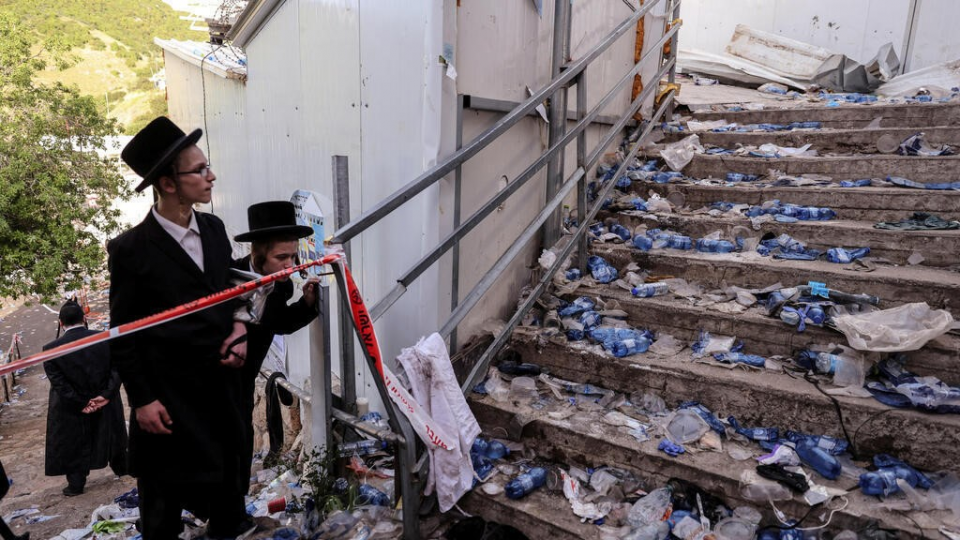
After the disaster
( Reuters )
The issue of ownership of the complex had a material impact on the way it was managed. The source of ownership of the property is the Sephardic endowment and the Ashkenazi endowment of Safed. However, over the years due to the splitting of the shrines and the holding of several organizations in the place, a legal discussion has been going on since 1998 on the issue of ownership of the complex between four different shrines, which are splits of the old Sephardic and Ashkenazi shrines. In 2008, a sharp report was published by the State Comptroller stating, among other things, that "the multiplicity of disputes and lawsuits over the ownership and management of the Rashbi complex has prevented the complex from operating efficiently and properly for many years and making it difficult to develop." It was also written that "the level of maintenance of the Rashbi building is low and does not suit the sanctity of the place."
In the same year, the Supreme Court decided to appoint a five-member committee called the "Committee of Five" (one from each body of the sanctuary, and a state representative as chairman, with a decisive voice) to manage the complex. In 2013, Finance Minister Yair Lapid signed an order to expropriate And its transfer to the management of a government company, with a commitment not to harm the character of the place and its sanctity, but in 2016 an interim decision was made by the High Court, according to which an administrative model must be given an opportunity to prevent the expropriation of the complex. In February 2020, the Supreme Court recognized an experimental mediation arrangement for a period of three years for the management of the compound with increased state involvement and the arrangement was given the force of a judgment.