


Globes, Guy Nardi 10.05.2021
Are large planning projects, already underway, likely to return to the planning table and be delayed for months and even many years? This issue arises after the Supreme Court's ruling over the weekend , which ruled in a dramatic decision to cancel the deposit of the Tamal / 1004 / A plan, which offers the construction of thousands of housing units north of Herzliya, and return it for re-planning.
The decision was made by a panel of seven judges at a further hearing and ruled that before the Apollonia plan, which is considered controversial from an environmental point of view, the sources of the pollution should be examined. That is, before planning and not at the execution stage.
Although the Supreme Court ruling only applies to the case of soil contamination in Apollonia, it has a much broader meaning and will be valid in discussions on other programs in which there are various types of hazards - as experts with whom we spoke for the article claim. An environmental hazard is defined as pollution or damage in a manner that causes adverse change in the environment and natural processes. Among the many hazards: air pollution, sea and beach pollution, soil pollution, and even loud noise from various sources.
Future implications
The operational significance is enormous: huge promoted plans, for which objections, objections, or appeals have been filed, will be forced to return to the planning table.
The construction plan in Apollonia, approved by the WTO (National Committee for the Planning and Construction of Preferred Housing Complexes) in March 2016, is an initiative of the Israel Lands Administration and the Nature and Parks Authority to build 2,687 housing units over 992 dunams.
The complex is located north of the Nof Yam neighborhood in Herzliya, east of the Apollonia National Park and in part, on the grounds of the Nof-Yam Industrial Plant, which operated on the site and produced explosives, ammunition and gunpowder. In tests conducted in 2016, abnormal values of the metals arsenic, chromium and nickel were found in the soil.
The "Adam Teva VeDin" association, together with the "Greens" faction in the Herzliya City Council, petitioned the High Court as early as 2006 due to the lack of treatment of pollution in the field. , And until 2019 complete the land clearing, regardless of the progress of the pace of land marketing in the complex.
Following this, four petitions were filed in the Administrative Court, which ruled that the approval of the plan would be revoked. In June 2019, the Supreme Court overturned the decision of the Tel Aviv Administrative Court and ruled that the VOTAL should not reconsider the plan.
Review of the program
The ruling of Supreme Court Justice Uzi Vogelman, last Thursday, criticized the way the program was promoted: "The implementation of the plan, and leaving the discussion of their implications to the lending staff, does not cure the aforementioned defect, and it further harms the public participation, which is at the heart of the planning process."
"It is not possible to involve the restoration of the land in the planning process without examining its implications for the development of the land proposed in the plan."
Attorneys Chaya Erez, Hagai Kelai and Orly Ariav represent residents in the fight against the construction plan in Apollonia: "The ruling has strengthened the place of environmental and nature considerations ... The horizontal implications are that The area on the plan, it will not be possible to plan in accordance with the "near" method that has taken root in recent years in the country, and leave the dealing with these consequences to later stages. "
Following the ruling in the Apollonia case, Globes turned to four experts active in environmental issues, in an attempt to understand its implications for some of the major planning projects that are soon to go out to work in the field - from the Tel Hashomer real estate project to approval of mining quarries across the country. No less dramatic and may bring them back to the planning table.
Metro in Gush Dan: "Red flag that will affect opposition in the metro"
Scope: 3 lines for transporting hundreds of thousands of people a day
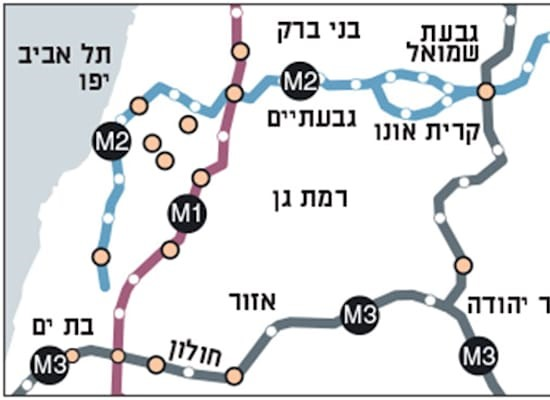
The metro in Gush Dan. Scope: 3 lines for transporting hundreds of thousands of people a day
The issue of the metro in Gush Dan is of course central - in light of the scope of the project and its importance. One line (M3) has already been approved by the planning committees and is awaiting government approval, so it is possible that the central significance of Apollonia's decision pertains to the following two lines.
Advocate Anat Biran, who represents dozens of opponents of the Gush Dan metro plan, says:
This refers to the constructive meanings of digging under houses, or radiation, and also soil contamination — these are claims that are made in very many places along metro routes. From what I have seen most of these claims have been rejected by the investigator to the execution stage. In my opinion, Apollonia's PSD raises a red flag and will influence the hearing of the objections of the metro lines. "
Quarries and Mining Program: "Judges Decide to Wait for Apollonia Court"
Scope: 121 quarries throughout the country
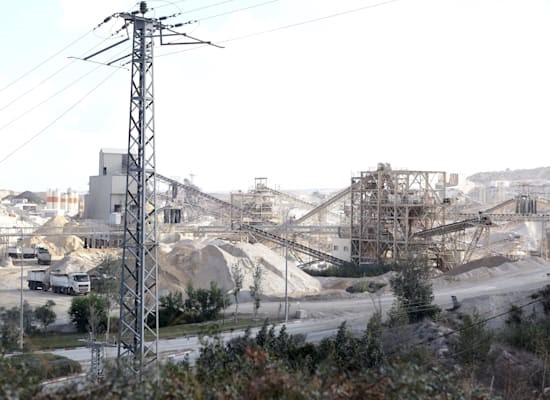 Quarries and Mining Program. Scope: 121 quarries throughout the country / Photo: Shlomi Yosef
The national outline plan for the expansion of all quarries in Israel (121 sites in total) may also be re-examined by the Apollonia ruling. "The principles of the national outline plan submitted in 2015 were that almost any existing quarry could be increased. One of the new sites is Sde Barir, near Arad.
"Every extension of an existing quarry brings the quarry closer to the residents," says Adv. Tomer Mirez. "I argued that it could not be that the guidelines for environmental surveys did not examine the potential of the hazards and their impact on public health. In 2017, the Supreme Court issued a restraining order and stopped the expansion of all quarries.
Today we are in 2021, and we were supposed to arrive for a concluding discussion in February. Following this hearing, the judges informed us that everything had been stopped and that we had reached a decision on the issue of Apollonia. I estimate that NAP 14B will be returned to the drawing board. "
Tel Hashomer project: "First confirmed, now they will have to go back"
Scope: Plan of 10,000 housing units
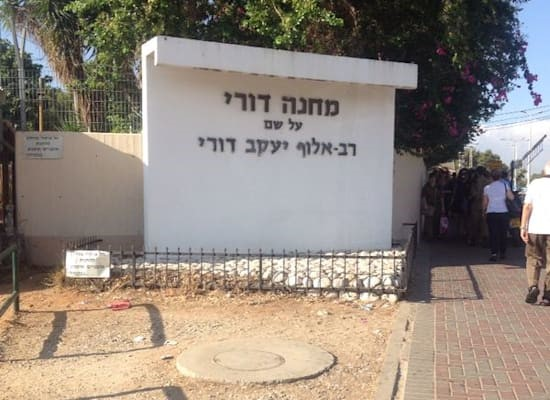 Tel Hashomer project. Scope: Plan of 10,000 housing units / Photo: Eli Yahav
Adv. Eli Ben-Ari, the legal advisor of the Adam Teva VeDin association: "To this day, from the state's point of view, when they came to plan an area with pollution, whether light or heavy, the matter was ignored. From now on, in any area that has contamination, they will have to collect the data. This means, among other things, that such a nimble planning, as the WTO, the one that designed Apollonia, loves to do - will not take place. "
Regarding the construction project in Tel Hashomer - a plan that includes 10,000 housing units and has already been approved - Adv. Ben-Ari says: "We know what materials are there, we do not know what areas are neutralized for such and such periods - but first of all they approved the plan. The discussion on the plan was delayed to wait for Apollonia's PSD, and is going back to court."
Haifa Bay: "They will have to return and treat the infection first"
Scope: 83,000 housing units and area for employment and trade
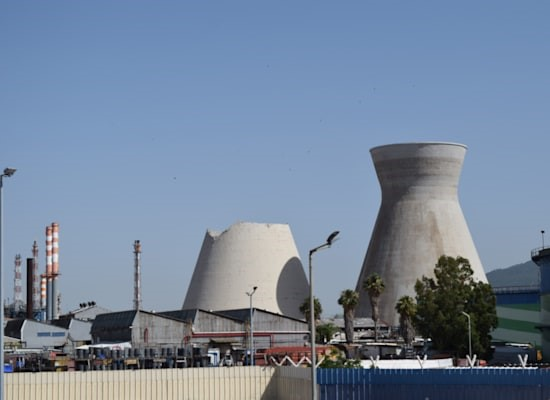 Haifa Bay. Scope: 83,000 housing units and area for employment and trade / Photo: Bar-El
The construction of the Bay of Innovation in the area of the refineries in Haifa Bay may also naturally be delayed following the issue of a decision on the Apollonia project. "The statements of the Israel Lands Administration Authority are that the area is supposed to reach it, residential neighborhoods will be established, and the pollution will be dealt with later.
The court's decision in the Apollonia case changed the picture, "says Adv. Eli Ben-Ari, the legal advisor of the Adam Teva VeDin association. "They will have to deal first with the pollution, do an environmental impact survey, know what materials are there, for how long these areas will be closed in terms of ability to use them. Keep in mind that if you are planning an expansion of the Kishon Park "This is a very complicated story to clear all of these areas."
IMI Hasharon: "The 'it will be okay' method has rolled down the stairs"
Scope: 3,600 housing units in Herzliya, Ramat Hasharon, Hod Hasharon
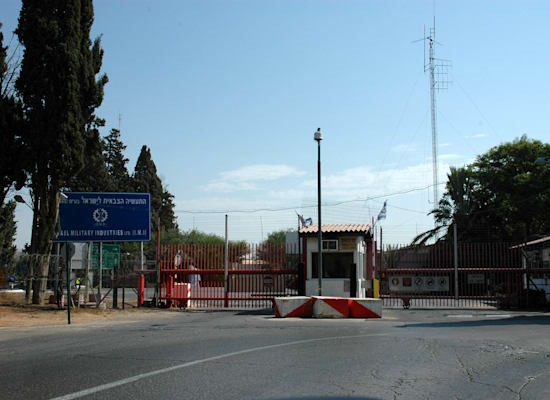 IMI Hasharon. Scope: 3,600 housing units in Herzliya, Ramat Hasharon, Hod Hasharon / Photo: Tamar Mitzpi
Another large project that is facing controversy due to environmental issues is the construction of 3,600 housing units on 7,500 dunams within the jurisdiction of the cities of Herzliya, Ramat Hasharon, Hod Hasharon and the Southern Sharon Regional Council.
Chairman of the Achla Association (Quality of Life for the Residents of the Sharon) Roni Rom: Infinitely much more than that.
"The decision that discussed the pollution of the IMI complex, puts the health interest at the top of the list of priorities, and stops the country at the last minute. To date, the state has sought to harness the cart in front of the horses and has tried to promote a real estate program, at the expense of public health, before conducting an environmental and risk survey.